Sometimes, at this point in the fall, I look around and ask myself, “where did the time go?” and other times, I think back to January and it feels like it was several lifetimes ago. This year it’s definitely been the latter. So much has happened in just the last few months. I spent September in Montreal where I was only too delighted to trade in the late summer heat of North Carolina for 70-something degree days. Will turned about 10,000 pounds of tomatoes into bloody mary mix. Charlie started his second year of grad school at UC Davis. And Ellie brought a whole new baby into this world! Starting down the coming months of winter can feel daunting, but as the days get shorter, I’m surprised to actually be looking forward to a season that invites rest and slowing down (and soup, so much soup). Because it looks like 2027 is going to be a big, exciting year for our team. And we all know that doing the work of fighting for the future we want to live in never stops, but we remind ourselves often that you have to take the downbeat, take the rest days, to stay energized for the long game. So keep reading to find out what we’ve been up to, what’s coming next, and the people, practices, and projects filling our cups along the way.
Elizabeth
P.S. - Not yet signed-up for our newsletter? Do so here.
We solemnly swear that we’ll never share your email or spam your inbox.
How do you feed a festival of 14,000 people local food? Just ask Carolina Reid.
Will here! 14,000 people turned out for Farm Aid 2026 this year in Virginia Beach, including me. It was my first time attending the festival, which is almost exactly a year older than I am, having turned 41 a few weeks after I turned 40.
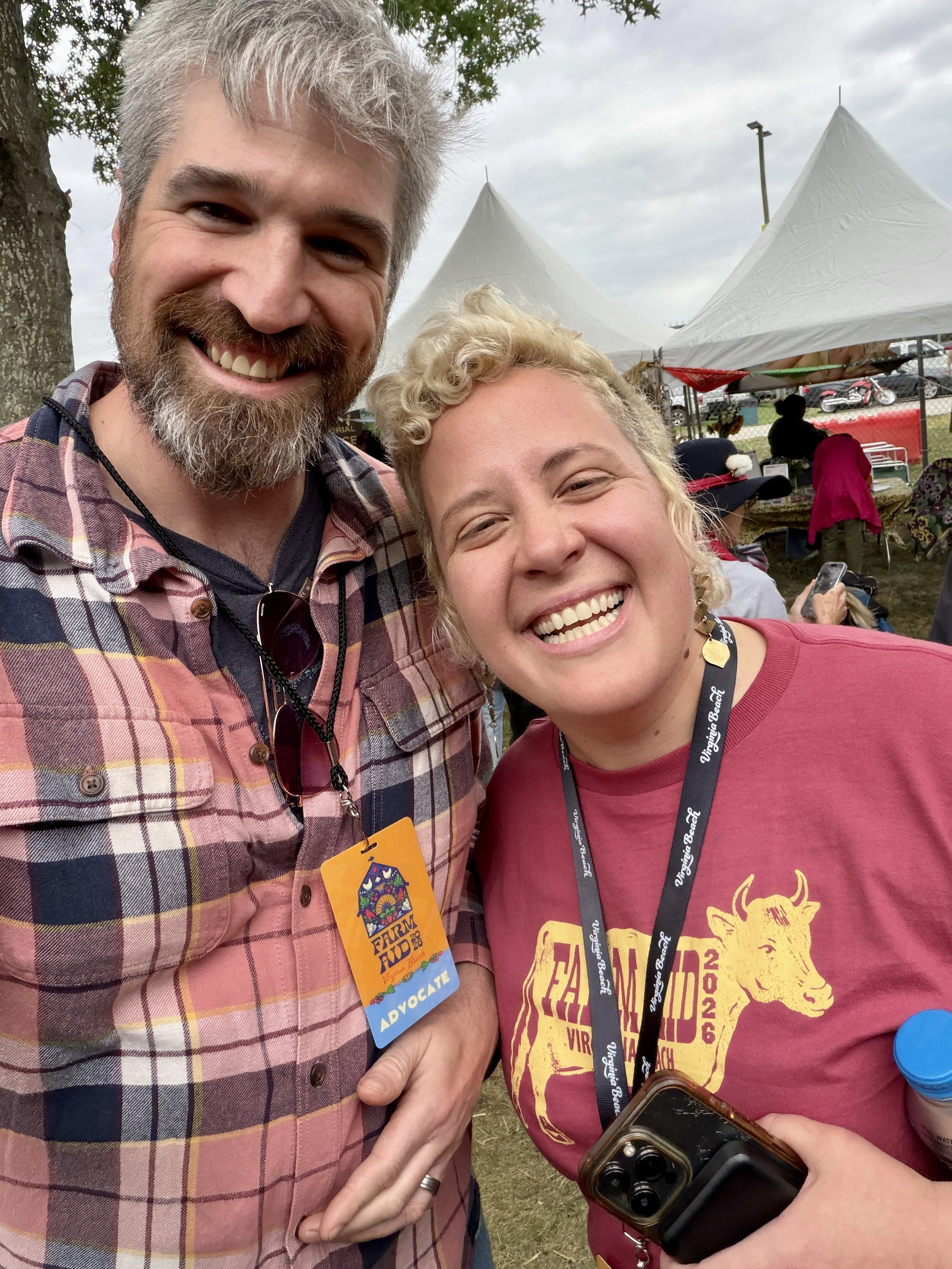
Will and Carolina cheesin’ about how psyched they are to support local farmers.
I was there not just for the music, but to see the results of a collaborative local sourcing project between four food hubs in the Eastern Food Hub Collaborative (EFC). This is my thing, the thing that makes people smile and nod and back slowly away from me at cocktail parties: the idea that food chains don’t need to be competitive; that facilitated collaboration is a viable path to getting good food to all people; and that there’s nothing indelible about the consolidation, extraction, and economic exclusion in the system we have today. It was built that way, and it could be built a different way, instead.
This is something that Carolina Reid understands. She’s a chef, food systems advocate, technical assistance provider, and culinary director of Farm Aid. I met Carolina in Spokane, WA, at a planning meeting for a national group of food hub network managers. She works with the Northwest Food Hub Network, a group analogous to the EFC. We’d gotten to talking, and now 6 months later, she worked through the EFC to source more than $50,000 of local food from a group of our members: Firsthand Foods, Freshlist, Working Landscapes, and 4P Foods. I got to pick Carolina’s brain about her experience at Farm Aid and what she’s learning in her role as culinary director.
-
The bites that come to mind were delicious, but stand out more because of their story.
The Chesapeake Poutine offered at the Seafood Shack tells the story of collaboration. It begins when the chefs at Legends present the concept—a mound of fries smothered in she-crab sauce, crab meat, and bacon. Farm Aid is lucky to partner with North American Marine Alliance (NAMA), a national non-profit whose mission is to resist big-business control of ocean resources, empower local fishermen, transform supply chains, and ensure fairness in seafood. Every year, they help connect us with fisherfolk in the region who sustainably catch wild seafood and can get that product to Legends with ease. Then, Farm Aid makes connections to sources for non-GMO fries, organic dairy products, and pastured bacon. When a festivalgoer is paying at the register, we often just have a moment to tell the story of where that food comes from, and that moment is best conveyed through a picture. When the pictures of the fishing vessels came through, the whole team was exclaiming--they're remarkable. I’m realizing the imagery we used was actually of the shrimping vessels (all storytelling assets can be seen on our website), but everything about the Seafood Shack was pretty exciting to me!
I also loved the Sweet Potato Salad. Having previously worked on the development of a “slice and dice” food processing program for a farmer-owned cooperative food hub in WA state, I know the value of a resource like this to farmers in a local area and to buyers. Lightly processed produce (sliced, diced, washed) can be the entry point to local purchasing for institutions (schools, hospitals, large-scale events) that may not have the internal staffing resources to prep raw produce. When I met with Maeve Boyles of Byway Foods, a processing program that is a part of Working Landscapes, I knew making the connection to buyers was invaluable. Maeve could tell us where the sweet potatoes were coming from and provide a product to the buyer that was ready for use.
During festival preparations, our Catering Manager Chef Justin Betzer threw a clam bake for the production team. We purchased Chesapeake clams delivered fresh from Coastal Shore Seafood, smoked andouille sausage from longtime Farm Aid partner Patchwork Family Farms, and also had chicken available from Pungo farmer What the Farm. For every lunch and dinner, we also offered a salad bar that represented more than a dozen Virginia and North Carolina farmers.
-
There are always lessons in a new region. This year, trucking logistics was a bigger conversation than ever because Virginia Beach is at the ‘end’ of the road—this means some of our shipments (like aluminum packaged water, and some grocery staples) had to be strategized timing-wise. Trucks aren’t coming this way every day of the week. A lesson like this emphasizes the power in local buying.
Of course, learning regional cultural nuances informs a lot of the work as well. Partnering with Tidewater Compost was powerful as we learned about the local government policies that make growing a composting business an uphill battle. Virginia Beach also has a 6% restaurant meals tax—this didn’t directly impact the event but it was notable when I was in conversations with local business owners and their customers. I also learned a lot about the peanut industry, everything from growing practices to processing to aggregation and distribution.
The most important takeaway is the power in partnership. I’m never going to know more than a local when I only have 6 months to explore a local food system. I try to talk to as many people as I can—farmers, business owners, truckers, eaters, anyone with an opinion. I’m lucky that Farm Aid has a rich history in building strong partnerships and when I feel stumped, there are a lot of people I can call.
-
Those of us “in” this local procurement world know that scale is not the issue, but our roles are often hidden. If you have purchasing power, and you’re proud of how you’re using it (buying local, source-direct, following a certain criteria, etc), even if it’s just 5% of your overall purchasing, talk about it! Share the story, whether that is with colleagues who are also in the procurement world or even just the average consumer.
I’ve worked in procurement at preschools, major grocers, food hubs, and culinary schools and every time I had the chance to tell a consumer something about how their food was sourced, it led to fascinating conversation and I’d like to think a little shift in the system. That 3-year-old that tasted a local, seasonal strawberry will beg for that flavor forever. The customers on the dairy aisle who learned about the new glass-packaged yogurt from a farmstead operation just 100 miles away will have an easier time reaching for that same option in the future. The restaurants whose customers return every quarter to taste that season’s soup develop a loyal, engaged customer-base because their local food hub can provide an interesting, seasonal ingredient. And the culinary students learning to dice, sauté, smoke, and grind will want to meet their farmers and producers when they carry on in the industry. The more people we have talking about this, the greater impact we can have!
On an operational level, the best thing buyers can do is make their purchasing decisions earlier than they are probably used to. Yeah, a local farm probably can’t get you 500# of carrots tomorrow but isn’t that level of immediacy a little concerning anyways? It’s why the greater food system in the US sees so much waste and a total lack of flavor in most goods (because they’re grown in excess for storage and shipment, instead of flavor). If buyers can make their decisions with even just a few more weeks notice, so much is possible!
-
I was lucky to meet some really remarkable farmers by shopping at the markets around Hampton Roads months before the event. I was able to purchase from them directly but beyond that, they each shared a lot about their experiences. It’s hard to think I won’t be returning to the region soon but it gives me excitement for connecting with the next region of farmers. Happy to leave that nor’easter in the past! Ha! ;)
“It’s just business.”
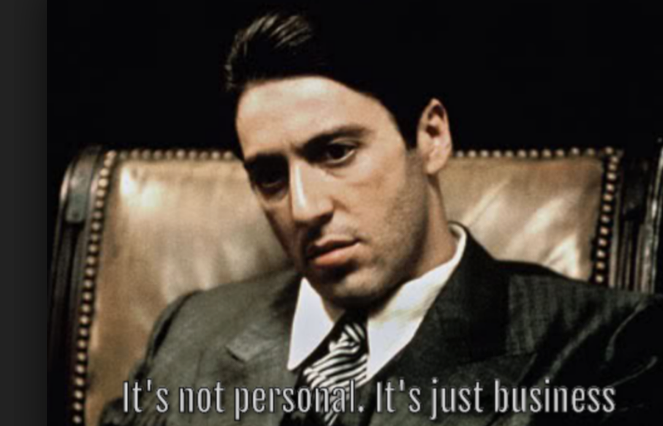
Charlie here: We’ve all heard the phrase a hundred times, often with a little added flair from Hollywood icons. Otto “Abbadabba” Berman first coined it in the 1930s following the violent crimes of his mob associates. Almost 100 years later, American capitalism has not only normalized, but encouraged, that corporations act with the moral scruples of a mob boss. We’ve seen that play out across the food industry - a handful of bosses wield power, exploitation, and political influence to consolidate and maintain control. Food hubs and food hub networks, like the Eastern Food Hub Collaborative (EFC), are trying to build a different kind of system - one in which it's possible to still do business, but in an entirely different way.
Members of the EFC do a lot of business together, and sometimes that business gets messy. Food hubs work in a fast-paced environment with high risk and narrow margins. What sets the EFC apart is that members don’t say “It’s just business” when it comes to working in the same market in overlapping geographies. They participate in this network because they believe that collaboration is fundamental to changing regional food systems and economies for the better. As they strive to work together in more sophisticated ways, like trade, data sharing, and distribution coordination, the inevitability of misunderstandings, missteps, and conflict only grows, demanding a process for preventing and navigating tension. So what can members do when toes get stepped on?
This summer, our team, with some coaching support from our friends at AORTA, facilitated a committee of EFC members to design processes for conflict prevention and reconciliation.
We started by getting to the root of what motivated these food hubs to join this collaborative and work together in this way. We articulated what underpins our work together - values like “mutuality,” “honesty,” and “impact.” Doing so laid a foundation for the governance structures we were building - guideposts to point to when we need direction.
From there we asked: What do EFC members owe to the network, and what does the network owe members? What rights and responsibilities do we each hold?
We did some live action role playing on Zoom, working through the kinds of real-world dilemmas that arise when doing business together. Though the scenarios were hypothetical, the feelings brought up were not. They came from experiences of being hurt, typically unintentionally, by someone that you know shares the same passion and values for the work that you’re doing. The challenge was there had never been an outlet for vocalizing that hurt in a way that would not cause further perceived damage. Grievances that often came out of gaps in communication were tabled, or worse, bottled up.
The heart of this pursuit was that we need to get more comfortable with confronting one another. And confrontation doesn’t have to be some big bad scary thing. It can be as simple as saying “Hey, I have some issues with how that went down. Can we talk about it?” But when confrontation doesn’t happen, it can boil over into conflict or ossify into resentment.
So our last step in this process was to establish SOPs for conflict prevention and reconciliation. Prevention was easier to outline: Be aware of yourself and others; Overcommunicate; Take responsibility. Reconciliation was harder; it demanded everyone to consider what would happen if someone wasn’t willing to make amends. Can we require members to go to mediation? Would the group impose punitive measures on noncompliant members? What is Seed Change’s role in all of this?
Together, we crafted graduated processes for repair and resolution, ranging from direct conversation to member removal. These processes were sent to the full membership for feedback and then for a vote to ratify into the EFC’s MOU. The gravity of committing to them wasn't lost on anyone. For the first time, there were enumerated expectations and consequences for participation, but there was also understanding that this would ensure organizational sustainability by protecting the relationships that compose and bind the network.
Working together like this isn’t easy. Mistakes and missteps are inevitable, and sometimes our actions are going to negatively impact others despite good intentions. Creating channels to address that impact, where the end goal is relational repair, not a zero-sum outcome, enriches collaboration. And collaborating with intention to create impacts far greater than the sum of its parts? Now that’s how we want to do business.

A Very Dolly Mix Tape
Elizabeth: When I found out that Dolly Parton died I had just crossed the border into Canada. I was, for a time, inconsolable. Through snot and tears I cried, “What a terrible time to be out of the South! This feels like a national emergency.” I was born less than two hours from where Dolly grew up, in a part of Appalachia where bluegrass music was a strong cultural unifier. And Dolly was just that - perhaps more than anyone else in modern history - across all kinds of differences, in Dolly we trust. So Dolly, this one is for you.
What we cook… when we’re too busy to cook
If you know us well then you know that if you peel back all the layers at the core of Seed Change, we’re just people who really love to cook - and eat - great food. Going to the farmers market, pouring over cookbooks for inspiration, or just getting creative with what we have on hand, delighting in seasonal ingredients - it's one of life’s greatest pleasures. But that all goes out the window when it’s 8pm on a Tuesday and your stomach is rumbling. So what do we cook when we’re too busy to cook?
-
This recipe brought to you by solo parenting nights when your partner is getting a well-deserved night off: Preheat oven to 375. Peel a sweet potato, and give it to your three-year old to play with. She will smash it on the floor. This is okay. Grab two boring boneless, skinless chicken breasts, or more interesting meat if you have it. Pat them dry and salt them hard; everything else will be a little underseasoned. Wash your hands, both of you.
Chop an onion, chop a bell pepper, chop a cuke. Tell your kid how sharp knives are. Bribe her with the cuke. She may not eat it, but she will relinquish the sweet potato. Chop the sweet potato, toss with olive oil and salt, and throw it in the oven. Set a 20-minute timer.
Heat a cast-iron pan over medium-high heat with a good glug of olive oil. Tell your kid how hot pans are. Heat it until “just before it smokes” if you have that superpower, or just watch out for the smoke. Put the breasts in the pan, smooth-side down, and don’t touch or turn them for five minutes. Even boring chicken gets a pretty nice sear after five minutes in a hot pan. Give the three-year old some hummus.
Flip the chicken, and move the whole pan to the hot oven. I had about 12 minutes left on the sweet potato timer, and that was perfect. Pull the chicken and temp it - I’m happy with anything over 150, but follow your own rules - and set the meat aside, covered, to rest. Pull the sweet potatoes, turn with a spatula, and put them back in. Add the onions and bell peppers to the chicken pan, stir to kinda-deglaze, and put that back in the oven, too.
Set the timer for 15 minutes. “When the timer goes off, we’re going upstairs for a bath.” Give the three-year old cookies and milk, ‘cuz she already ate veggies right? When the timer goes off, turn off the oven. Pull the veggies, which will be nicely steamed. Set the rested chicken on top, pour in the accumulated juices. Put the pan back in the oven, off, and leave the oven door slightly open. Thank your three-year-old for helping, and put her to bed. Eat dinner at, like, 9:30pm.
-
For this season’s newsletter, I won’t give you a recipe. I’ll give you so much more. My wife and I love to cook, but sometimes it feels like we’re the living embodiment of the joke “marriage is just two people asking each other what they want to eat until they die.” Between deciding what to make, the shopping (usually at about four different places), the prep, the cooking, the cleanup, it feels like a whole other part-time job. A few months ago some friends told us about Restaurant Dropout, a substack created by Zoe Barrier. Zoe helps readers take a restaurant chef’s approach to being home chefs. Each Friday she sends out a menu of five recipes, a shopping list (that uses a lot of the same ingredients multiple times), a prep list, and all kinds of useful suggestions for preparation and storage. On Saturdays we get our groceries, and on Sunday we spend a few hours taking the mis en place approach to food prep - chopping and storing all the veggies, making sauces, blending spices, seasoning meats ahead of time. Then when it’s Tuesday at 8pm, we’ve done all the prep work and we can easily pull together a five-star meal in under 30 minutes. It’s taken a lot of the guesswork out of meal planning and meal prep, and that’s helped cooking feel like more of a joy (again) and less of a chore. It costs $6 a month and, Zoe, if you’re listening, we would gladly pay many times that.
-
My wife’s been traveling a lot for work lately, which has its pros and cons. Con: Our meal prep capacity is down by 50%. Pro: I can eat baked fish for dinner every single night, something I can’t usually do because she’s understandably not the biggest fan of our house smelling like Pike Place Market. I typically alternate between salmon and white fish and have a veggie on the side. I also forfeit any carb or starch and instead eat a double portion of fish - call me lazy or a genius, but it’s less dishes to clean, and I can bake the fish and veggies at the same time, in the same amount of time.
Last night I got home at 6:30pm after class, started preheating the oven to 400, pulled two portions of defrosted pollock fillets out of the fridge, and realized I had neither lemons or garlic on hand. So I experimented. I emptied one Trader Joe’s 14.5oz can of Organic Diced & Fire Roasted Tomatoes with Green Chiles into a 9x13 baking dish and mixed in a generous amount of garlic powder, onion powder, and italian seasoning. Then I laid the pollock fillets in the bed of tomatoes, lightly coated them in salt and black pepper, and finished with an olive oil drizzle. I popped the dish in the oven, along with a portion of asparagus tossed in olive oil, garlic powder, and cayenne pepper, and 15-20 minutes later - voila! In a total of 30 minutes, I’d made dinner, played with the dogs, and started an episode of The Twilight Zone (the perfect 25-minute show for a quick meal).
